Many years ago, police stations were often offices with a wing for cells. That description no longer applies to modern police accommodation, and certainly not to any of the buildings we’ve handed over this summer.
Within a few weeks, four forces have taken on four buildings from us: a forensic science centre, two headquarters and a custody-led operational hub. What strikes me, seeing them finish together, is how much they have in common.
What interests me more is that between them, four forces have set out an exacting test of how a contractor ought to work on this kind of estate.

A new forensic services centre for Thames Valley Police
One direction of travel
All four replace more, smaller, older buildings with fewer, larger, better ones.
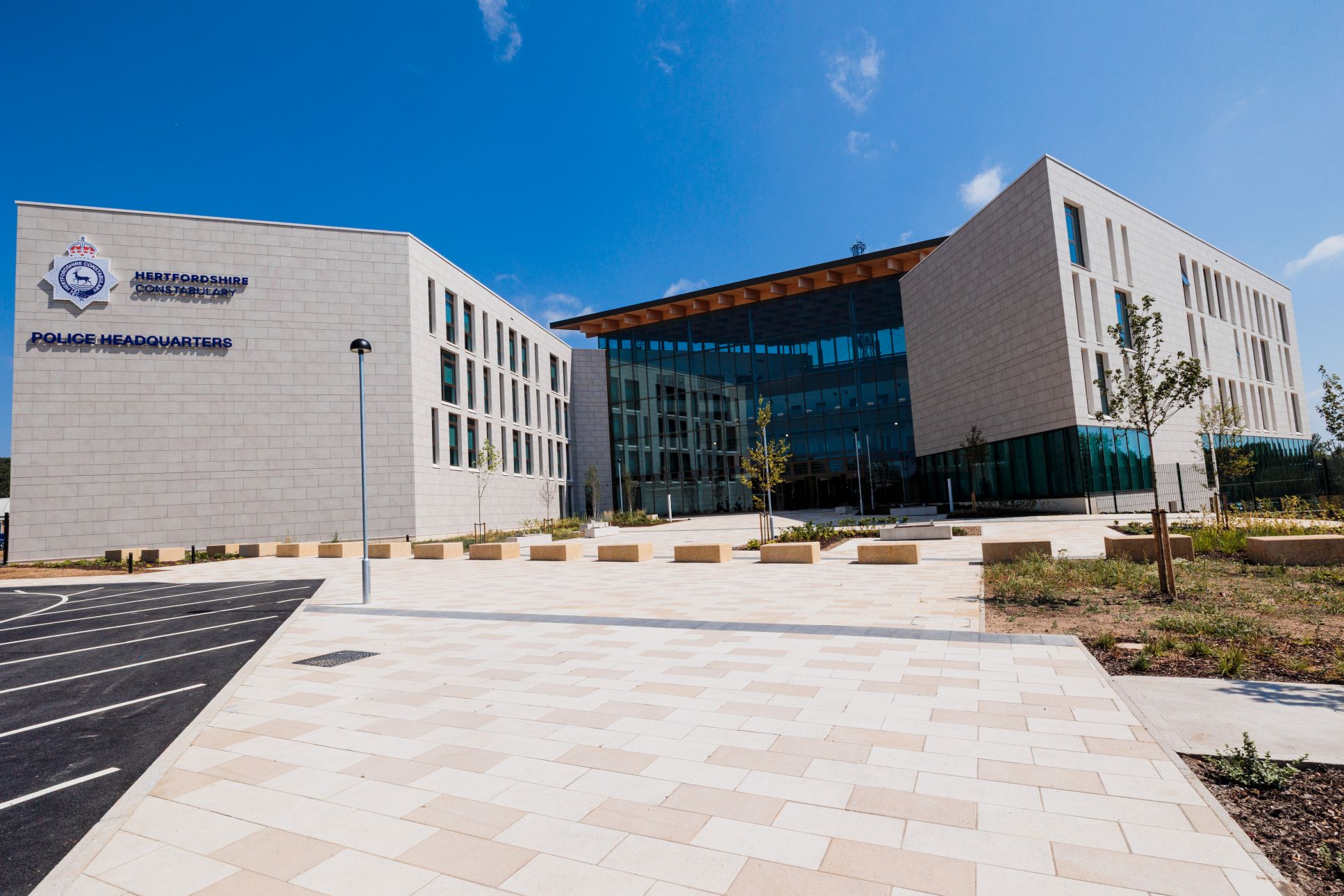
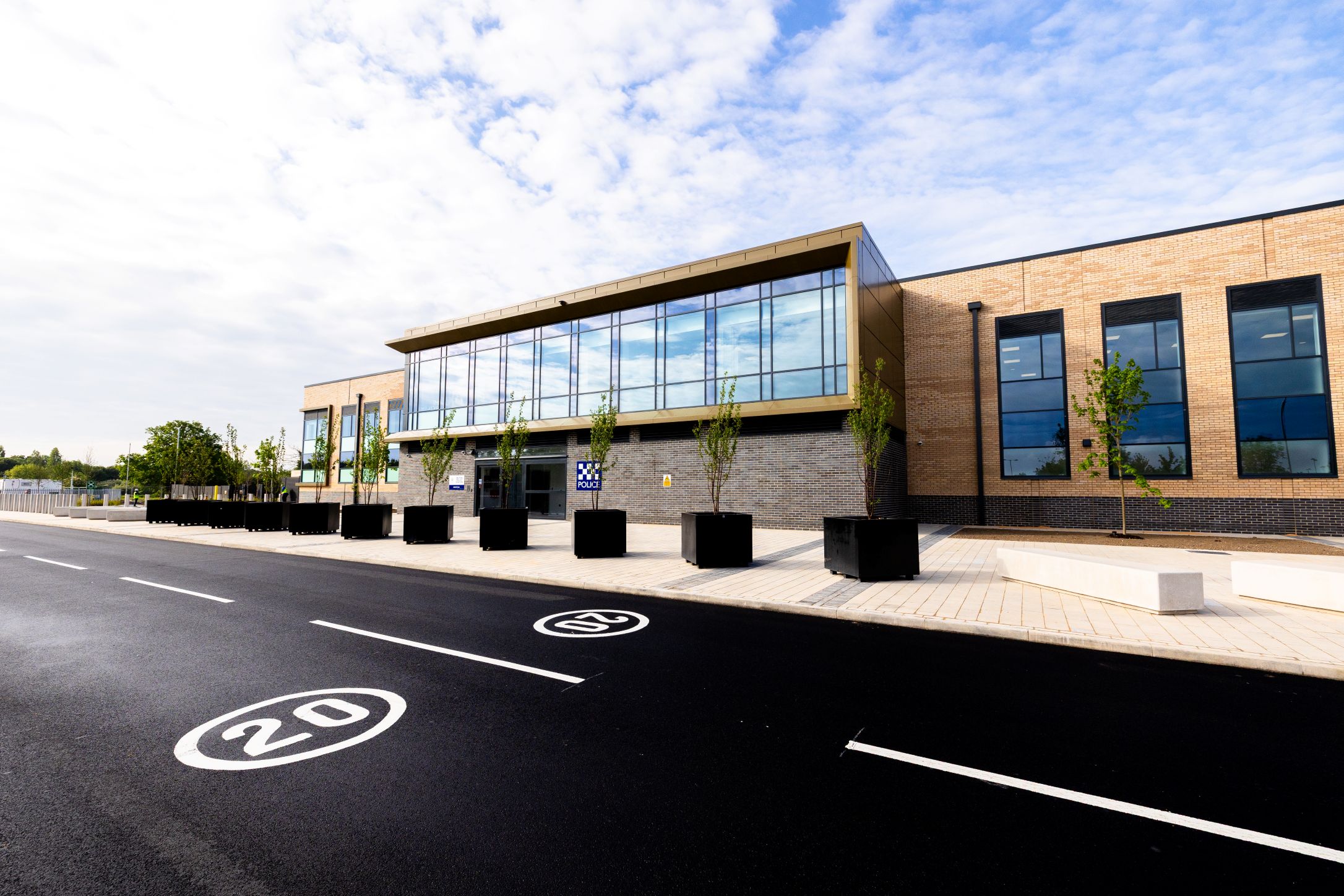
Cambridgeshire Constabulary’s new hub at Milton replaces the 1960s Parkside station with a 24-cell custody suite, twice the capacity it succeeds, on around half the energy. Hertfordshire Constabulary’s £56m headquarters at Welwyn Garden City replaces 1960s accommodation with one 9,000m² building for more than 500 officers and staff, drawing in major crime, victim services and operational support.
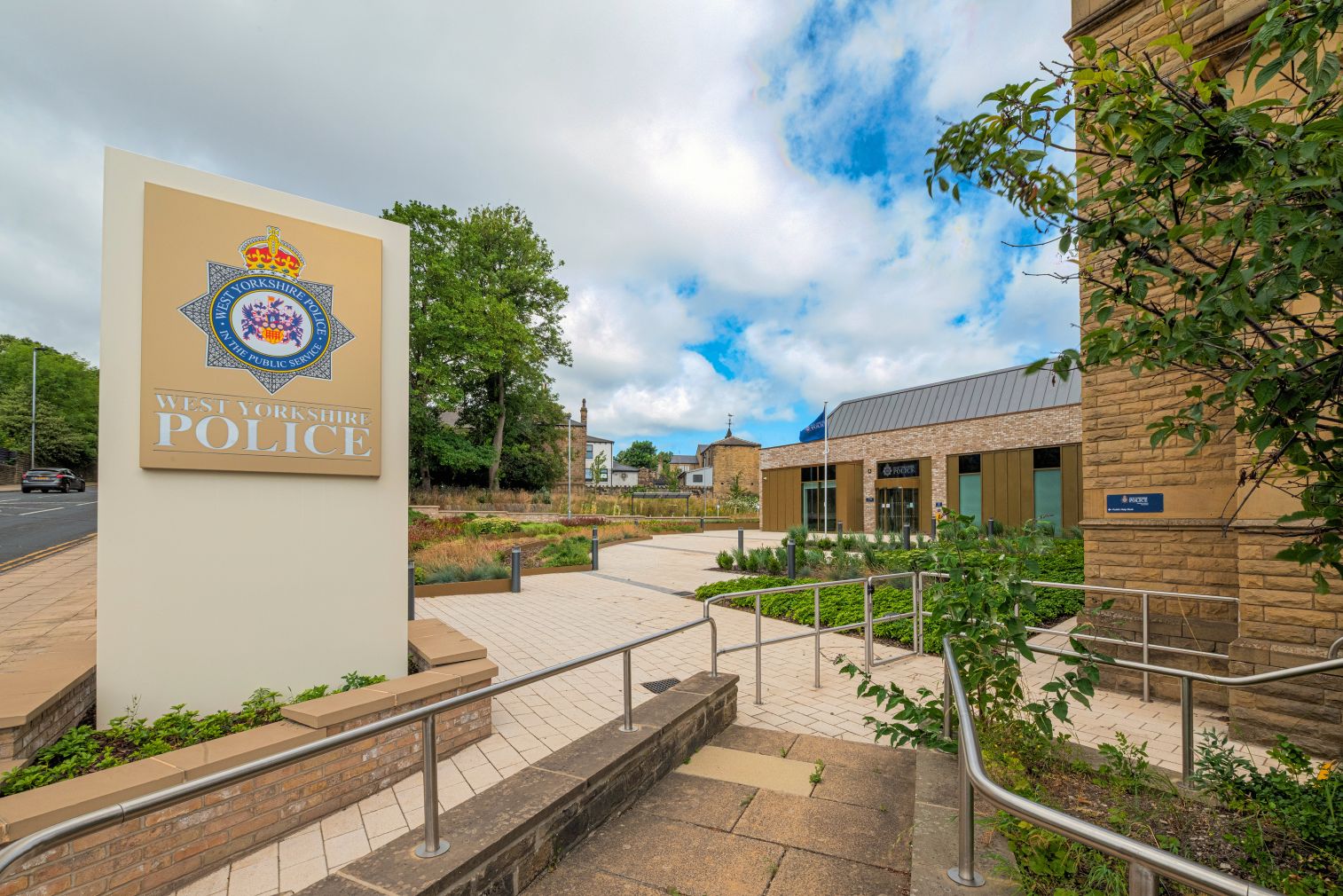
At Bicester, our £34m Forensic Services Centre brings Thames Valley Police’s dispersed forensic teams under one roof for the first time. In Dewsbury, the Kirklees district headquarters for West Yorkshire Police puts investigation, district policing, and a Category A custody suite into 10,464m² over six storeys.
Specification is rising faster than the floor plate
Custody built to current Home Office guidance. Secure detainee movement routes, and public and staff zones kept apart. Integrated security to national policing standards. Laboratories carrying statutory regulatory obligations.
This requires understanding and knowledge of complex detail. Get an adjacency wrong in a custody suite, or the environmental conditions wrong in a laboratory, and you have a building that cannot be accredited or safely operated.
The caseload has moved too. Milton has enhanced accommodation for investigating fraud and online offences. Bicester co-locates digital forensics with the laboratories and crime scene investigation. Buildings specified as recently as 20 years ago were not specified for that.
Forces are building to attract and keep the best
Hertfordshire is the first police facility in the UK designed to achieve WELL Platinum, the top level of the international standard for occupant wellbeing. Kirklees has a gym and welfare provision; Milton has quiet rooms, showers and cycle storage. At Thames Valley Police, its new facility has a gym, changing and shower facilities, drying room, cycle storage and multi-faith facilities. They also achieved a BREEAM excellent rating for the building in terms of indoor comfort, lighting and air quality.
For years, working environments across the blue light estate lagged behind operational need. That is changing; forces compete hard for people, and a high-quality modern office environment is an important asset to support retention.
Complexity starts early
At Kirklees (above) we were involved before the site was chosen, supporting feasibility and optioneering across several locations. The 1880s Oldroyd building was then kept and refurbished at the centre of a secure facility. At Milton, five months of archaeological excavation, turning up Roman, Iron Age and Bronze Age remains, came before a frame went up. At Thames Valley Police, the requirement was to maintain uninterrupted policing operations with the adjacent traffic base and consider residential considerations with new infrastructure like electricity provision and fibre networks.
These were problems we were expected to absorb as the construction experts. Our part in this work starts before a contract exists and does not stop on handover day.
Custody may be the most repeatable building in the public estate
The standards are national, but the functional requirements vary between forces.
Milton used CODE, a standardised custody model we developed with NORR Architects, more than twenty forces and the Home Office: pre-designed, pre-costed components that comply with the Police Custody Design Guide. Kirklees applied lessons from custody suites we had built before. That is repeatability by relationship rather than by design. Health, justice and defence have gone further, into alliances and standardised platforms. Frameworks such as SCAPE, Procurement Hub and the SCF give policing speed of procurement, while we can help with programme-level learning.
Someone must carry that learning, and in our case, it is a local team who know the force and the planning authority, backed by a business that has already learned elsewhere what a custody suite or a laboratory demands. Forces should ask for both.
What forces should ask for
That is the discipline I try to set my own business. Our strategy to 2030, Building our Future, commits us to three things, and a police estate programme tests all three. Firstly, exceptional service, where our teams put the customer at the heart of everything we do by actively supporting and understanding and resolving their challenges. Secondly, local focus backed by national strength: a local team who know the force and the planning authority, carrying what the rest of the business has already learned. And finally, whole project support, from optioneering before a site is chosen to a building that still performs long after we have left.

